
Is the education system perfect? Well, many agree, while a few may disagree. But does it destroy the notion of creativity? Let us find out all about it in this blog.
Our educational system has received a lot of criticism because it doesn’t appear to have been updated or improved in recent years. One of the themes that have come up frequently in these debates is the concept of creativity. Is it possible that being creative has diverse meanings for different people? What can we do to encourage our pupils to be more creative?
What is Creativity?
Although the term may be interpreted in various ways, let us still introspect. Creativity is assumed to convey one particular meaning. Some conceive it as an innate aspect, while others believe that it can be honed. Imagination, self-expression, and innovation are all aspects of creativity. Creativity can also refer to the application of scientific principles and logic to decipher problems.

You will definitely observe some people to be far more intelligent than others if you look around. So, we can infer that creativity is all about the application of intelligence, skill and knowledge. Thus, education does not represent the mere memorization of facts and figures. So, what can be done to enhance creativity?
The Present Scenario
Traditional educational systems are in trouble. In Australia, 25 percent of students drop out. The ironically called No Child Left Behind program in the United States has resulted in a rate closer to 30%, which includes 80% of Native American pupils. As a result, these ex-students earn less money and pay less tax. The economic loss caused by these dropout rates totals $1 trillion over 11 years.
Many of those that stay are doing so because they expect something. They are disengaged, and they are pressed to focus so intensely on test scores and evaluation standards that they have no time to consider what actually matters. Today, very few talk about inventions, new innovations, techniques or methods.
What Can be Done?
Students should be taught to analyze a lot of aspects about a particular issue or notion. It should not be the case that everyone is following the teacher’s verdict and set rules. We’ve been taught that being “good” entails remaining silent and still.
While hyperactive students are frequently chastised, energetic students are frequently admonished. Perhaps it’s time to rethink what we teach and how we teach it.
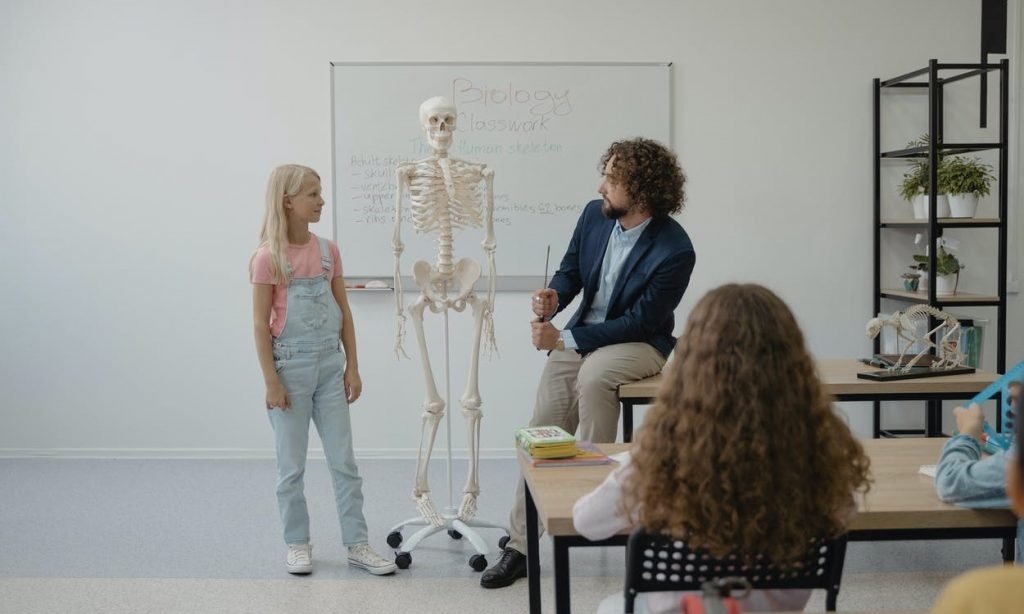
Schools, for example, should begin to include a broader range of disciplines in their curricula. We may have classes in painting or poetry. We might even begin to teach traditional subjects in a new way. Students can act out key events in history class instead of memorizing dates to feel more connected to what they are learning.
Diversity
It’s critical not just to acknowledge that children are unique, but also to provide them the freedom to investigate a variety of themes. While math and science are vital, a well-rounded education includes the humanities, physical education, and practical, real-world classes that help kids acquire functional independence. Rather, the system encourages uniformity.
There is no such thing as a flawless educational system, but there are some that are better than others. The teaching approach used in schools has the potential to stifle innovation. Most academic disciplines, such as arithmetic, physics, and history, demand organized correct or incorrect answers. While art classes are offered in schools, they are usually taught as an elective rather than a core topic. Perhaps the method through which the above subjects are taught can help young children become more creative.
Curiosity is Imperative
A drive to learn must be instilled in students. It has to come from the teachers in the end.
Instead, the system encourages people to comply with the rules. Students are not urged; rather, they are taught. Teachers are in the same boat. You’d be hard-pressed to discover someone who entered the profession with the intention of inspiring and transforming lives. Teachers have their capacity to do so thwarted by system expectations.
For instance, if you learn about plants and seeds, why not grow one and observe the process? Students should jot down their observations, and they will be able to imbibe more information from visual interpretation.
Similarly, if students are taught astronomy, why curb knowledge extracted only from textbooks? Students should be encouraged to view YouTube videos, explore journals, create their own cosmology map and read articles from official NASA websites.
How Can Creativity be Further Instilled?
We need creativity desperately in schools not only as a means for engagement, but also as a tool. Instead, the system encourages standardization.
A Long Unanswered Question
Sir Robinson raises a concern on many people’s minds in his 2007 TED talk, Can Schools Kill Creativity? We don’t know what the world will look like in 10 years, so how do we teach to ensure pupils are successful in a speculative future?
We’re still asking the same question, in the same way, ten years later. There has been no change. The answer is the same as well.
Meanwhile, if you write an article on the same topic, you can take pointers from this blog. And if you require further assistance, you can seek university assignment help from professional experts.

What Must We Teach?
We must instill creativity in our students. We must teach them to make mistakes and learn from them. To recognize that knowledge is malleable, and can be applied outside of the context in which it was initially provided.
When these concepts are at the heart of what is taught, it is dubbed “alternative education.” This means that practical, engaging instruction has no place in the mainstream. At its core, education is social rather than institutional. For the classroom to be really effective in the future of work, power must be returned to both instructors and students.
Hopefully, you have some insight into the subject matter whether the education system is killing creativity or not.
Leave a Reply